
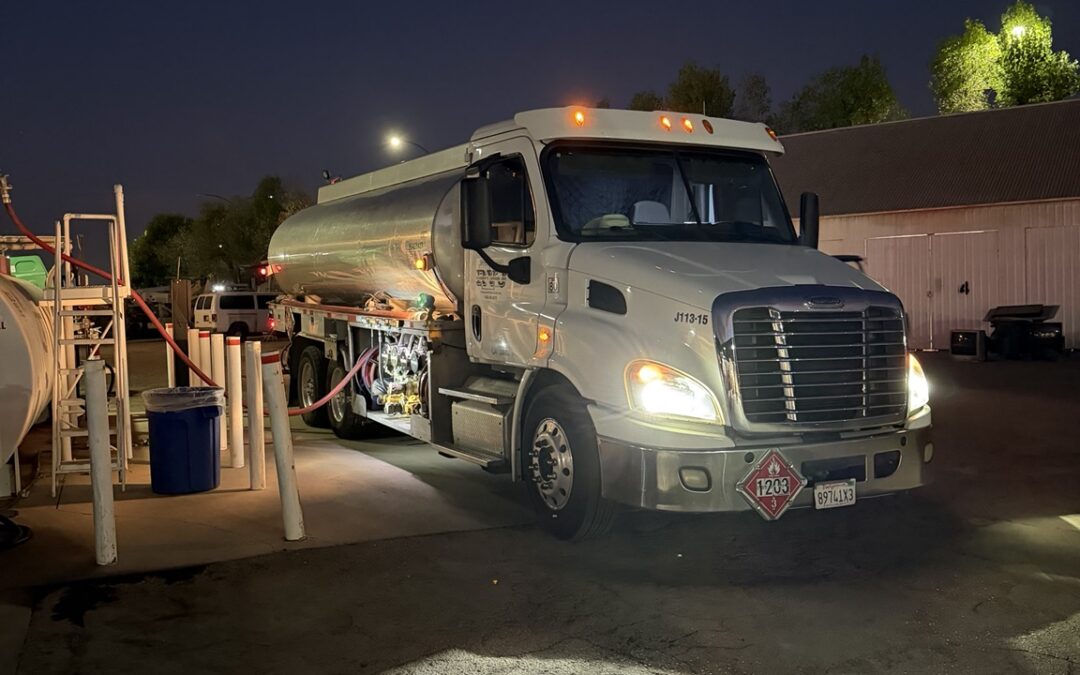
For businesses that depend on fuel every day, onsite storage is already a familiar part of the operation. A well-matched storage and delivery strategy can help keep fuel availability aligned with the way the operation runs.
Tank capacity, delivery quantity, and delivery frequency all play a role. Looking at those factors together can help businesses get more from their existing storage, adapt to changing fuel requirements, and determine when a different delivery approach or additional storage may make sense. Changes in storage can also introduce regulatory and site considerations, making it worthwhile to evaluate the full picture when an onsite fueling setup is added, expanded, or adjusted.
Tank Capacity Is Only One Part of the Equation
It’s easy to think of onsite fuel capacity and fuel delivery as two separate decisions. In practice, they’re closely connected. The amount of fuel an operation keeps onsite affects how frequently deliveries are needed. But the amount that can be delivered at one time matters too.
For an operation with predictable, high-volume consumption, larger transport deliveries may be a natural fit. But not every business needs a full transport load for each delivery. Smaller tanks, fluctuating demand, multiple locations, or other operating circumstances can call for a different approach.
That means an increase in fuel consumption doesn’t automatically point to a larger tank. Before expanding storage, it’s worth considering whether a different delivery quantity or cadence could support the operation using the storage already in place.
A Full Transport Load Isn’t the Only Option
Delivery flexibility can change the storage equation. RV Jensen’s bobtail fuel delivery provides an option for smaller volume requirements, generally ranging from approximately 500 to 5,000 gallons. Bobtail delivery can serve farms, jobsites, equipment yards, smaller tanks, and other operations that don’t need a full transport load.
Larger-volume requirements may be better suited to transport delivery. Having access to both approaches gives businesses more flexibility to match deliveries to their actual storage and operating requirements rather than designing their fuel plan around a single delivery method.
In some cases, that might mean smaller deliveries more frequently. In others, higher consumption and sufficient storage capacity may make larger transport deliveries a better fit. The appropriate combination depends on the operation.
Could Delivery Frequency Solve the Problem Before More Storage Does?
When fuel needs increase, adding storage may seem like an obvious response. But it’s not the only variable available. Consider an operation whose existing tank capacity still works well most of the year but becomes tight during periods of heavier consumption. Increasing permanent storage could be one solution. Adjusting delivery frequency during those periods could be another.
The reverse can also be true. If deliveries have become more frequent as an operation has grown, increasing storage capacity may deserve consideration.
Tank capacity, delivery quantity, and delivery frequency work together as parts of the same fuel-supply plan. Evaluating them together can help identify the most practical adjustment as fuel needs change. That can be especially relevant when operations change over time. Before assuming the tank is the problem, it can be useful to look at how the current delivery schedule is interacting with it.
When Changes to Storage Deserve a Compliance Review
Storage decisions aren’t purely operational. Adding tanks or increasing storage capacity can also affect regulatory responsibilities.
In California, the Aboveground Petroleum Storage Act (APSA) generally regulates qualifying tank facilities when total aboveground petroleum storage capacity reaches 1,320 gallons or more, although other conditions, exclusions, and requirements affect whether a particular facility is regulated. One detail worth noting when evaluating a change in storage is that California calculates applicable storage capacity based on the shell capacity of qualifying containers, not simply the amount of petroleum currently stored in them.
Federal Spill Prevention, Control, and Countermeasure (SPCC) requirements also use storage-capacity thresholds. For qualifying non-transportation-related facilities, the federal rule generally applies when aggregate aboveground oil-storage capacity is greater than 1,320 gallons, along with other applicability criteria. Despite the similar numbers, APSA and federal SPCC requirements should not be treated as interchangeable. Local requirements may apply as well.
When an established operation adds or expands fuel storage, it’s worth confirming whether the change affects existing compliance obligations. California businesses can review current CAL FIRE/Office of the State Fire Marshal APSA resources, and the U.S. Environmental Protection Agency provides guidance for determining SPCC applicability, including guidance specifically for farms.
New or Changing Sites Add Another Variable
An existing tank that has been receiving deliveries for years is one thing. Adding storage, relocating a tank, or establishing fuel storage at a new location creates additional considerations.
When adding or relocating fuel storage, consider how the tank location fits into normal site operations, including access for fuel deliveries. For a new or changing installation, considerations can include delivery-vehicle access and maneuvering space, equipment and vehicle traffic around the storage area, and applicable tank-placement, fire-code, and other site requirements.
Those requirements vary by facility and jurisdiction, so they should be verified by the appropriate authorities when storage is installed, relocated, or modified. Evaluating those factors while the storage arrangement is being planned is considerably easier than discovering an access or placement problem after the fact.
Portable Storage Can Add Flexibility for Changing Jobsites
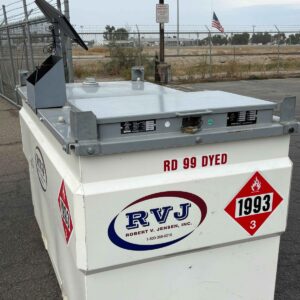
Permanent storage isn’t the only option in every situation. Construction projects and other changing worksites can have fuel requirements that move as the work progresses. For qualifying fuel-delivery customers, RV Jensen can provide leased portable double-walled fuel tanks designed for jobsite use.
These units are mounted on towable trailers and include internal baffles, built-in secondary containment, a lockable equipment cabinet, and secure hose access. Double-wall construction provides built-in secondary containment, but it doesn’t eliminate every site-specific regulatory, installation, or safety consideration. Tank suitability and placement still need to be evaluated for the site. For qualifying operations, portable storage can provide another way to align fuel availability with where equipment is working.
Plan Storage and Delivery Together
Experienced operators generally know how much fuel their businesses use. If fuel consumption has changed, the answer isn’t automatically a larger tank. It may involve changing delivery frequency, changing delivery volume, increasing storage capacity, or using a combination of those approaches.
RV Jensen provides bulk fuel delivery across California’s Central Valley and Central Coast, with both smaller-volume bobtail service and larger transport deliveries. If you’re evaluating an existing fuel-storage arrangement, adding storage, or planning for changing fuel requirements, the RV Jensen team can help you review delivery options that fit your operation.
Call RV Jensen at 1-800-366-8210 to discuss your fuel delivery needs.